Health Care
Health is a major developmental concern. Health problems and poverty possess a cyclic relation wherein each feeds the other. With the rising commercialization of the health sector, health facilities are becoming out of reach for poor. The IWF aims to assist the poor and needy by providing them state-of-art health facilities on subsidized/ marginal costs
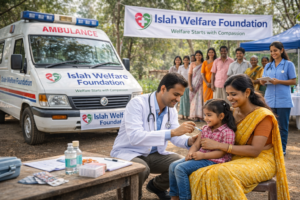
Medical Centre and Clinic
Why are medical facilities more needed in rural areas?
Access to basic healthcare remains a major challenge in rural and remote areas. Many villages lack nearby medical facilities, qualified doctors, and essential diagnostic services. As a result, preventable illnesses often go untreated, leading to serious health complications, financial hardship, and even loss of life. Establishing Medical Centre and Clinics in villages by NGOs is therefore both a social necessity and a humanitarian responsibility.
- Limited Access to Healthcare
Rural populations often have to travel long distances to reach hospitals or primary health centres. This delay in treatment worsens health conditions, especially for pregnant women, children, the elderly, and persons with disabilities. Village-level clinics ensure timely and affordable medical care at the doorstep.
- High Burden of Preventable Diseases
Many rural illnesses arise from poor sanitation, unsafe drinking water, malnutrition, and lack of awareness. Medical centres help in early diagnosis, preventive care, immunisation, and health education, significantly reducing disease burden.
- Maternal and Child Health Needs
Maternal and infant mortality rates are higher in rural areas due to inadequate antenatal care and skilled medical support. NGO-run clinics can provide:
- Antenatal and postnatal care
- Nutrition counselling
- Immunisation support
- Referral services for high-risk cases
- Affordability for the Poor
Private healthcare is often expensive and unaffordable for poor families. NGO medical centres provide free or low-cost services, ensuring that financial constraints do not deny anyone their right to healthcare.
- Health Awareness and Behavioural Change
Village clinics serve as centres for health education and awareness, addressing myths and misinformation related to health, nutrition, menstrual hygiene, mental health, and lifestyle diseases.
- Strengthening Government Healthcare Systems
NGOs complement government efforts by supporting existing health schemes, reducing pressure on public hospitals, and helping communities access benefits under national health programs.
- Emergency and Referral Support
Basic clinics play a crucial role in first aid, emergency stabilization, and timely referrals, which can save lives during accidents, childbirth complications, or sudden illnesses.
- Building Trust within Communities
NGOs working at the grassroots level often enjoy strong community trust. Local clinics staffed with trained professionals and volunteers create a safe, approachable, and culturally sensitive healthcare environment.
Islah Welfare Foundation is planning to establish & run a Medical Centre at rural area in the village of the district Darbhanga, Bihar.
Medical Camps
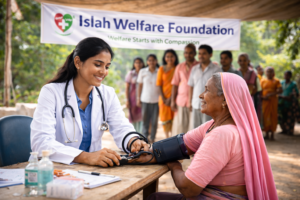
Free Medical Camps is an important activity in the field of healthcare. The purpose of holding free medical camps is to provide primary healthcare services to neglected and hard-to-reach communities at their doorstep. Islah Welfare Foundation is planning to be organized free medical camps and has been able to provide the clinical services and free medication to patients suffering from skin diseases, acute respiratory infections and diarrheal diseases resulting from poor access to healthcare, unhealthy lifestyle, lack of awareness on health and hygiene and non-availability of proper sanitation.
Ambulance Services: Patient Transportation Facility
Charitable / Free Ambulance Service in Villages
In rural and remote village areas, access to emergency medical transportation is often limited or completely unavailable. During critical situations such as accidents, childbirth complications, heart attacks, or serious illnesses, delays in reaching a hospital can cost precious lives. For poor families, the high cost of private ambulances further worsens the situation.
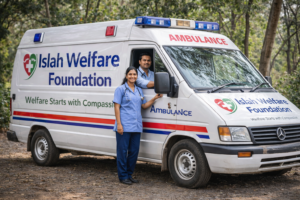
Recognising this urgent need, Islah Welfare Foundation is planning to initiate a charitable/ free ambulance service to ensure timely and safe transportation for patients from villages to nearby hospitals and healthcare centres.
Why ambulance service essential in villages?
- Lack of Immediate Medical Transport: Most villages do not have round-the-clock ambulance facilities.
- Time-Sensitive Emergencies: In medical emergencies, every minute matters. Delayed transport can be fatal.
- Support for Pregnant Women: Safe and timely transfer for deliveries and maternal emergencies saves lives.
- Financial Relief for the Poor: Free ambulance services reduce the financial burden on economically weaker families.
- Accidents and Sudden Illness: Road accidents, strokes, and heart attacks require urgent medical attention.
IWF aims to ensure that no one is denied emergency medical care due to a lack of transport or financial constraints. Our ambulance service will operate with compassion, dignity, and a strong commitment to serving humanity.
Islah Welfare Foundation is planning to offer ambulance services in rural areas to provide an immediate patient transportation facility to the needy and neglected section of society for any medical emergency that is operational day and night. This is a major setup in terms of medical aid, as the absence of public transportation is one of the reasons for the failing healthcare system, even in places where basic health infrastructure exists.
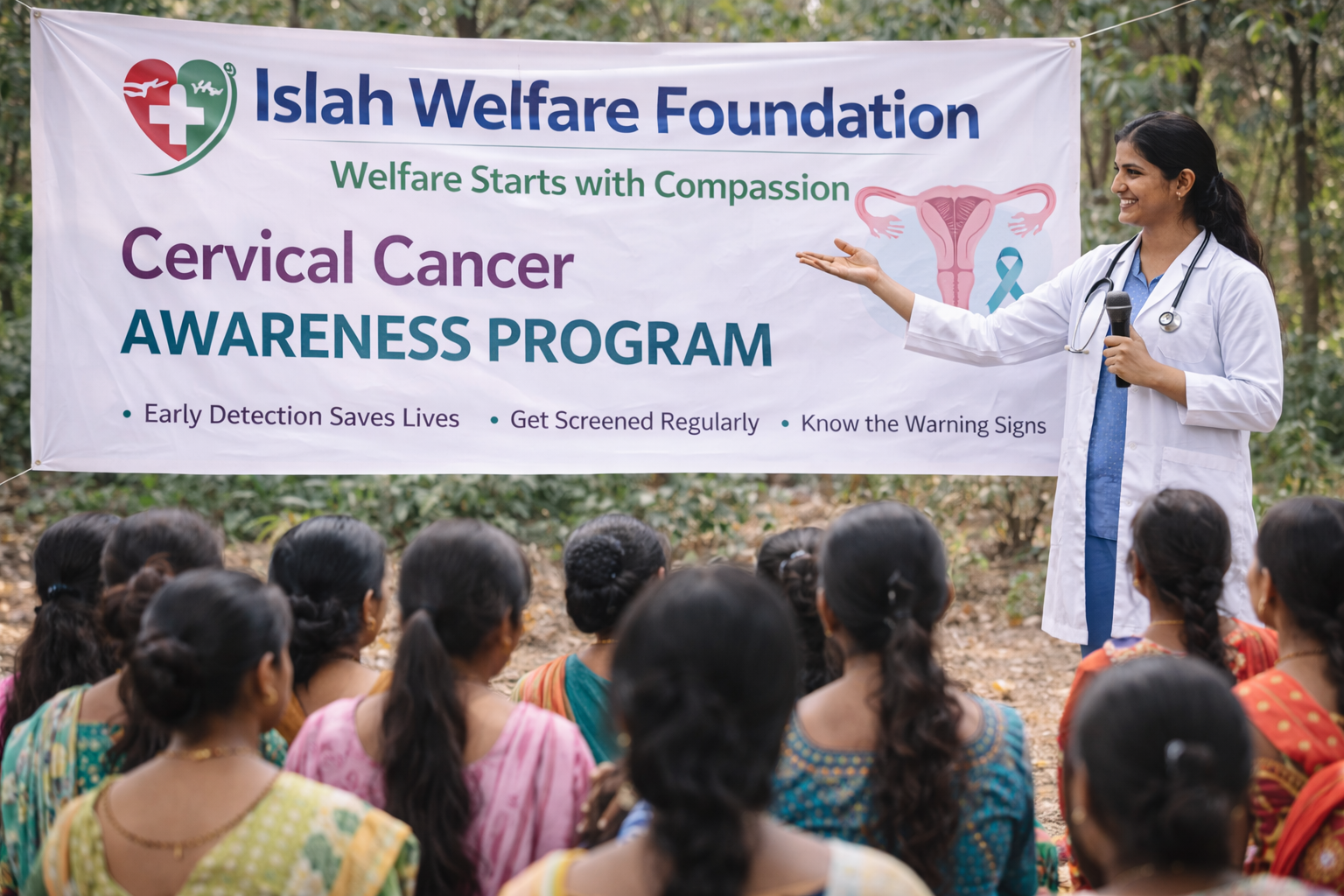
Cervical cancer awareness programme
Cervical cancer is one of the most preventable yet common cancers affecting women, particularly in rural and underserved communities. Limited awareness, lack of regular screening, social stigma, and poor access to healthcare services often result in late diagnosis, when treatment becomes difficult and costly.
To address this critical issue, Islah Welfare Foundation conducts Cervical Cancer Awareness Programmes in villages to educate women, promote early detection, and encourage preventive healthcare practices.
Cervical cancer remains a significant health concern in India, affecting thousands of women each year. According to the World Health Organisation (WHO), India accounts for approximately 25% of the global burden of cervical cancer cases. The lack of awareness and access to preventive measures contributes to this high mortality rate. Furthermore, only a small percentage of women in India receive regular screenings for cervical cancer, with less than 5% benefiting from HPV vaccination. These statistics emphasise the urgent need for comprehensive strategies to address cervical cancer in India.
Cervical cancer, caused by Human Papilloma Virus (HPV), is the second leading cause of death among women in India. Cervical cancer can be prevented through routine screening. However, the routine Pap test, a procedure that tests for abnormal cells on the cervix, is not easily accessible to low-income women in India, where organised cancer screening programs are absent. Lack of financial resources, limited knowledge and stigma about cervical cancer also deter screening uptake. Self-sampling for HPV is an affordable option to reduce access barriers. It allows women to take their own sample, which can be done at home and at a time convenient to them.
We want to break down barriers to women’s health and empower women to take action regarding their own health. For Cancer Awareness, our cervical cancer-free campaign is an innovative, family-centred and evidence-based program. It aims to reduce cervical cancer among low-income women in rural and urban neighbourhoods across 8 states in India.
Why cervical cancer awareness is needed in villages?
- Low Awareness Levels: Many women are unaware of cervical cancer, its symptoms, and prevention methods.
- Late Diagnosis: Lack of screening leads to detection at advanced stages.
- Social Taboos: Cultural barriers prevent open discussion about women’s reproductive health.
- Limited Healthcare Access: Rural women often lack access to gynaecological services and screening facilities.